3D Nyomtatás Motorsport Alkalmazásokhoz
Gyors. Könnyű. Teljesítményre tervezve.
Additive manufacturing provides motorsport teams and engineering companies with a fast and flexible solution for producing functional components, prototypes and low-volume parts with 3D printed motorsport parts.
A POLYFORGE-AM egyedi, 3D nyomtatott alkatrészeket gyárt motorsport alkalmazásokhoz, műszaki hőre lágyuló műanyagokból és szálerősített anyagokból. Az alkatrészek közvetlenül az ügyfél által biztosított CAD-fájlok alapján készülhetnek, ami rövid átfutási időt és gyors tervezési iterációkat tesz lehetővé.
Mérnöki Anyagok Nagy Igénybevételű Alkalmazásokhoz
Az alkalmazástól függően az alkatrészek PA12-CF, PA6-CF, ABS, ASA, PC és más műszaki hőre lágyuló műanyagokból gyárthatók.
A szénszál-erősítésű anyagok különösen kedvező kombinációját kínálják az alacsony tömegnek, a nagy merevségnek és a méretstabilitásnak, így számos motorsport-fejlesztési és nem szerkezeti funkcionális alkalmazáshoz alkalmasak.
Az anyagválasztás az elvárt hőállósághoz, mechanikai tulajdonságokhoz, felületi minőséghez és az adott üzemi környezethez igazítható.
Gyors termékfejlesztés és kis-sorozatú gyártás
A motorsportban alkalmazott additív gyártás egyik legnagyobb előnye, hogy a CAD-tervtől rendkívül gyorsan el lehet jutni a kész fizikai alkatrészig.
Az alkatrészek hagyományos szerszámozás nélkül is legyárthatók, így a 3D nyomtatás különösen alkalmas prototípusok, konstrukciós validációs darabok, pótalkatrészek és kis sorozatú gyártás megvalósítására.
Ez lehetővé teszi a csapatok számára, hogy különböző geometriákat teszteljenek, gyors módosításokat hajtsanak végre, és frissített alkatrészeket gyártsanak a hagyományos szerszámozáshoz kapcsolódó költségek és hosszabb átfutási idők nélkül.
CAD-fájltól a kész alkatrészig
Az ügyfelek STEP-, STL- vagy más megfelelő 3D fájlokat biztosíthatnak a gyártáshoz. A gyártás megkezdése előtt a geometria, a nyomtatási orientáció és az anyagkövetelmények felülvizsgálhatók a megfelelő gyártási stratégia kiválasztása érdekében.
Az ismétlődő gyártást igénylő projektek esetében a gyártási paraméterek szabványosíthatók, így több gyártási tételen keresztül is egyenletes és reprodukálható minőség biztosítható.
A Polyforge AM ipari 3D nyomtatási szolgáltatásokat kínálprototípus-fejlesztés és kis sorozatú gyártás professzionális mérnöki és versenysport-alkalmazásokhoz.
3D Printed Motorsport Parts
Motorsport development often requires components to be designed, manufactured, tested and modified within very short development cycles. Industrial 3D printing for motorsport provides an efficient manufacturing solution for functional prototypes, engineering components and low-volume 3D printed car parts where conventional tooling would be too slow or uneconomical.
Polyforge AM provides 3D printing services for motorsport applications of functional polymer components manufactured from engineering-grade materials. Parts can be produced directly from CAD data, allowing teams, engineers and vehicle developers to move rapidly from digital design to physical testing.
The technology is particularly suitable for components that require complex geometries, low weight, frequent design changes or production in small quantities.
Air Ducts and Cooling Components
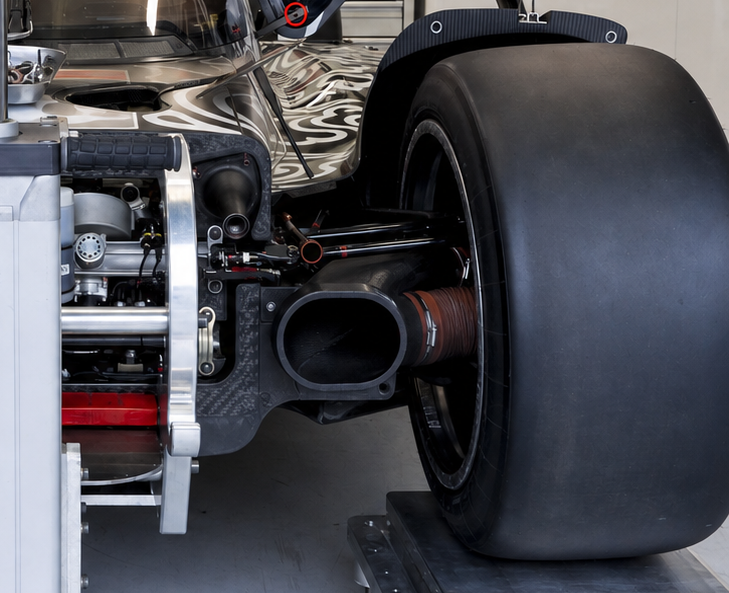
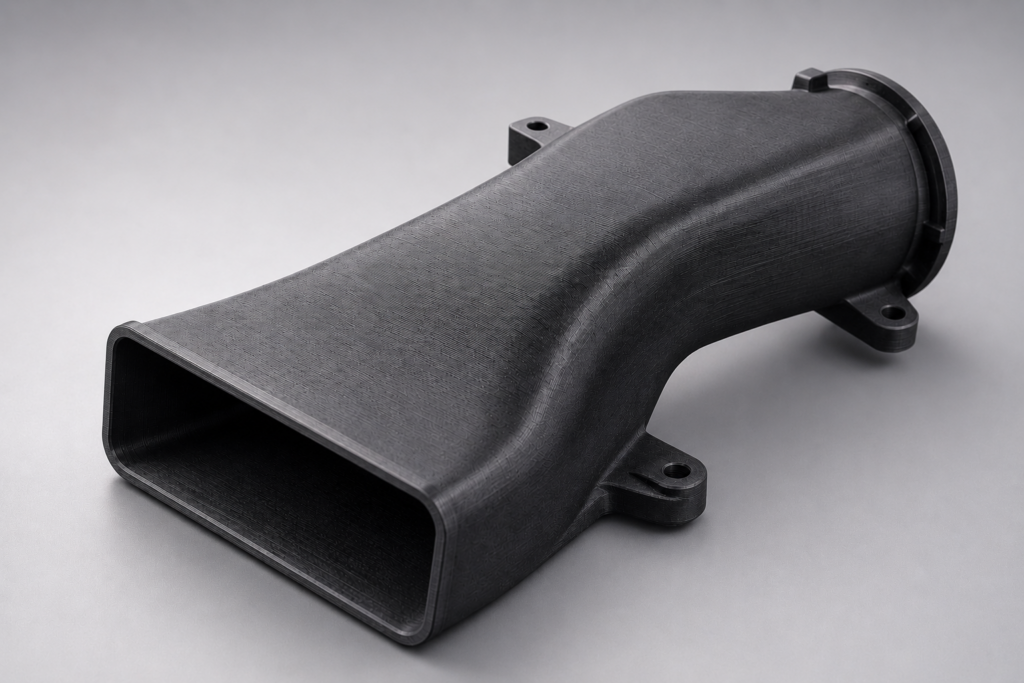
3D printing for motorsport can be used to manufacture custom air ducts, cooling ducts and ventilation components for brake cooling, electronics cooling, cockpit ventilation and thermal management systems.
Because additive manufacturing does not require conventional tooling, duct geometry can be adapted quickly around existing vehicle components, packaging limitations and airflow requirements.
Typical applications include:
- brake cooling ducts
- electronics cooling ducts
- cockpit ventilation channels
- radiator and heat exchanger ducting
- battery or control-unit cooling components
- custom air distribution channels
Complex internal geometries, curved transitions and integrated mounting features can often be manufactured as a single component, reducing assembly requirements while allowing rapid design iteration.
Sensor Mounts and Electronics Brackets
Modern race and development vehicles frequently use additional sensors, cameras, telemetry systems and electronic control units.
3D printed car parts, sensor mounts and electronics brackets for motorsport, provide a fast method for installing these components without producing dedicated machined tooling or modifying existing vehicle structures unnecessarily.
Applications may include:
- temperature sensor mounts
- pressure sensor brackets
- accelerometer mounts
- GPS and telemetry mounts
- camera brackets
- data logger supports
- ECU and electronics mounting components
Designs can be adapted to the available installation space and modified rapidly when sensor position, orientation or hardware changes during vehicle development.
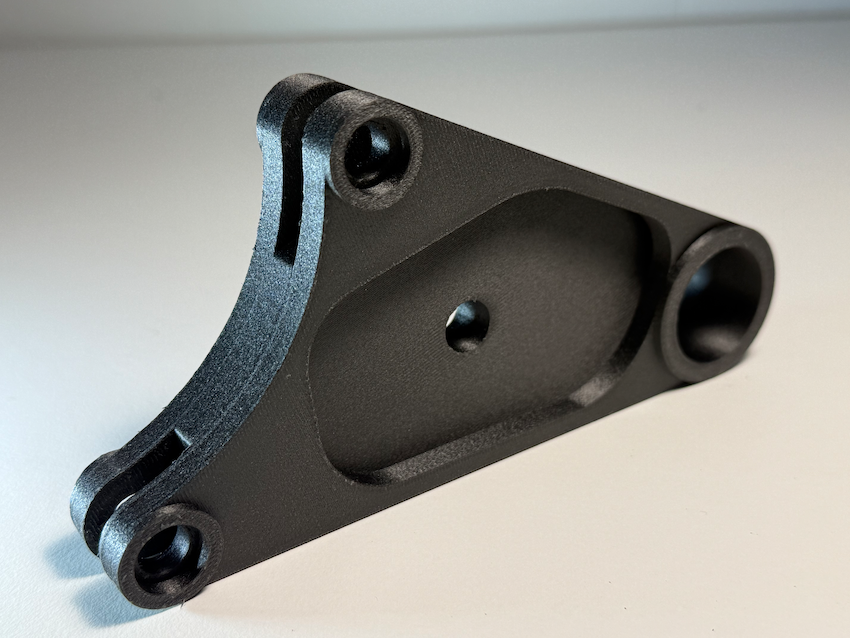
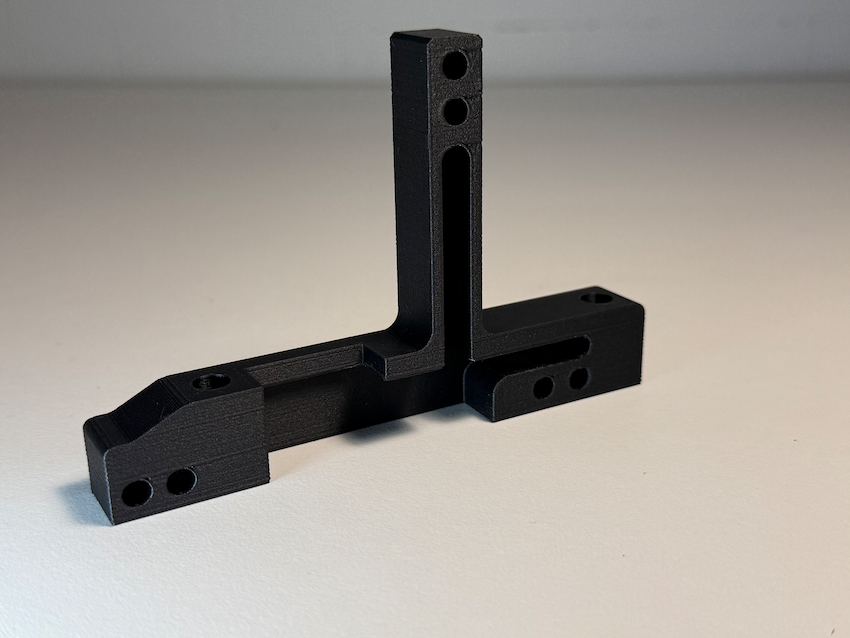
Functional Brackets and Supports
Engineering-grade polymers and carbon-fibre reinforced materials can be suitable for a wide range of non-structural motorsport brackets, supports and mounting components.
Typical examples include:
- lightweight mounting brackets
- reservoir supports
- hose supports
- electronic component brackets
- interior mounting structures
- switch-panel supports
- lightweight equipment mounts
Additive manufacturing allows ribs, reinforcing features and mounting points to be incorporated directly into the geometry, helping designers optimise stiffness while reducing unnecessary material.
Cable and Hose Guides
Race vehicles contain extensive electrical wiring, sensor cables, pneumatic lines and fluid hoses that need to be routed safely and consistently.
Custom 3D printed car parts, cable guides, hose guides and routing clips can be designed around the exact vehicle geometry.
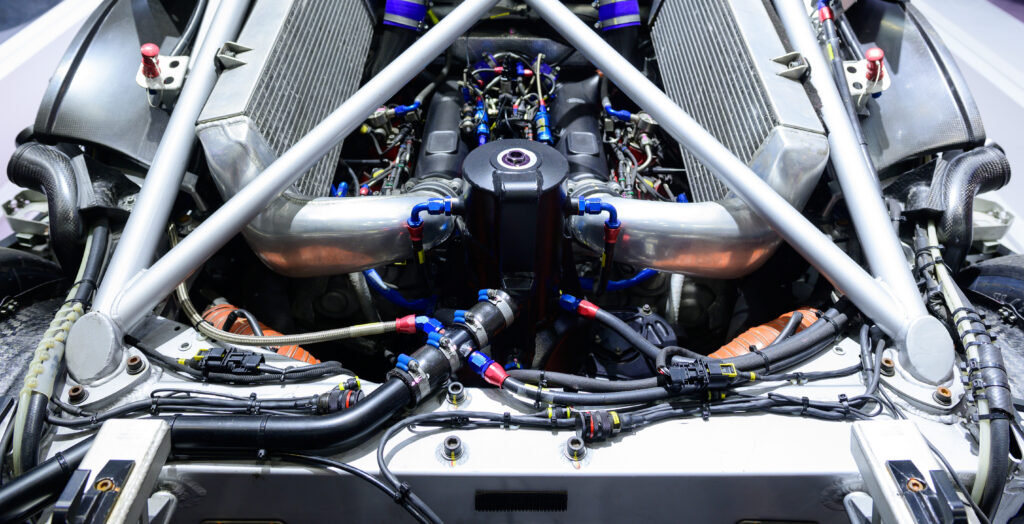
Examples include:
- wiring harness guides
- cable separators
- hose routing brackets
- sensor cable clips
- firewall cable guides
- multi-line routing components
These 3D printed car parts can be manufactured in very small quantities and updated immediately if routing changes during development.
Dashboard and Cockpit Components
3D printing is particularly useful for customised cockpit components where production volumes are low and vehicle-specific geometry is common.
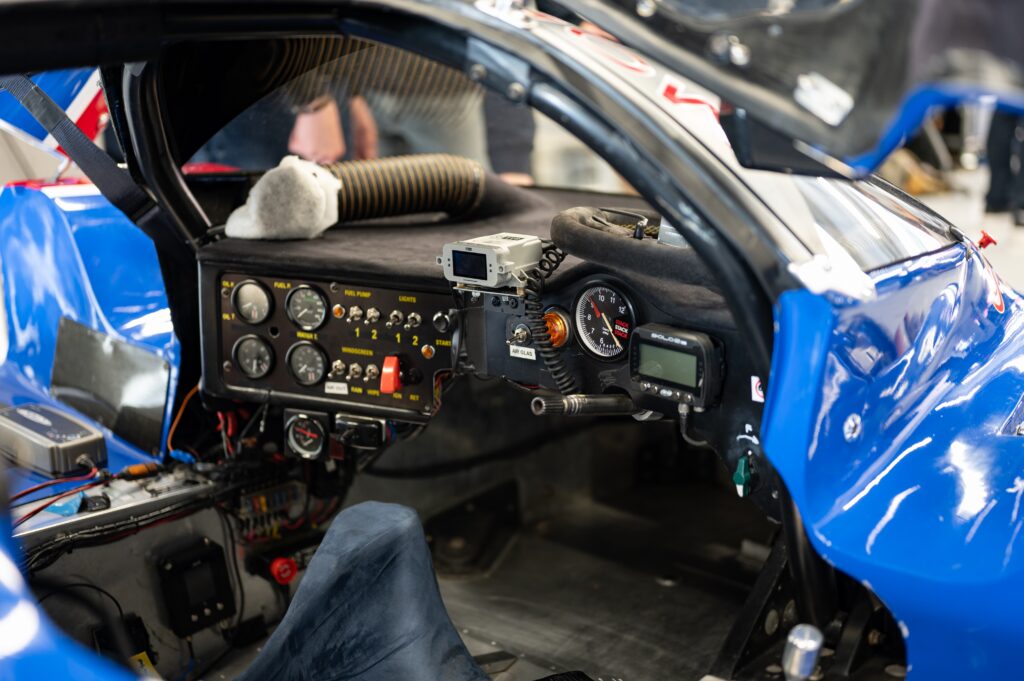
Typical 3D printed dashboard and cockpit components include:
- digital display housings
- switch panels
- button surrounds
- dashboard inserts
- control-unit enclosures
- driver interface components
- camera or display mounts
These parts can combine multiple mounting features into a single component and can be redesigned rapidly following driver feedback or changes to electronics.
Intake Adapters and Air Management Components
Additive manufacturing enables complex geometries that can be difficult or expensive to produce using conventional machining. Our 3D printing services for motorsport applications are useful and convenient when short lead time is mandatory.
This makes industrial 3D printing suitable for prototype and development-stage intake adapters and air management components.
Applications can include:
- intake adapters
- throttle-body adapters
- sensor housings
- airflow transition pieces
- airbox development components
- prototype intake geometries
During engine or intake development, several design versions can be produced without creating new moulds or machining fixtures for every iteration.
Material selection should always consider the expected temperature, mechanical loading and operating environment of the component.
Aerodynamic Development Parts
Rapid manufacturing is particularly valuable during aerodynamic development, where small geometry changes may need to be evaluated repeatedly. 3D printing for motorsport applications earn time and and decrease expenses.
3D printed aerodynamic parts can support prototype development and vehicle testing without the cost of conventional tooling.
Typical examples include:
- small wing elements
- aerodynamic fairings
- airflow deflectors
- canards
- vortex generators
- prototype aerodynamic surfaces
- sensor fairings
Design revisions can move directly from CAD to manufacturing, allowing new configurations to be evaluated within a short development cycle. Number of 3D printed car parts increasing continuously in the industry.
For larger assemblies, multiple printed components can also be manufactured separately and joined during prototype development.
Workshop, Assembly and Setup Tools
Not every useful motorsport component is installed on the vehicle.
3D printing for motorsport can also be used to produce customised workshop tools, assembly aids, fixtures and setup equipment that improve repeatability during vehicle preparation. 3D printed car parts are available for wide range of applications.
Examples include:
- drilling templates
- positioning fixtures
- assembly jigs
- measurement aids
- alignment tools
- protective caps
- storage inserts
- dedicated installation tools
- component holding fixtures
Because these tools are often required only in small quantities, additive manufacturing can be significantly faster than conventional production methods.
Prototype Housings and Enclosures
During electronics and mechanical system development, enclosure geometry often changes several times before the final configuration is established.
3D printed car parts and prototype housings allow engineers to verify component fitment, cable routing, accessibility and mounting positions before committing to a final production solution.
Typical applications include:
- electronics housings
- sensor enclosures
- battery-management housings
- control-unit covers
- prototype junction boxes
- custom equipment enclosures
Functional materials allow many of these components to be tested directly on the vehicle rather than being used only as visual prototypes.
Low-Volume Replacement Parts
Motorsport vehicles frequently require components that are produced in very small quantities or are no longer commercially available.
Low-volume 3D printing for motorsport replacement parts can provide an efficient solution when conventional tooling or machining would not be economical.
Potential applications include:
- discontinued plastic components
- custom brackets
- interior components
- cable and hose routing parts
- covers and housings
- development-specific replacement components
- small-series vehicle-specific parts
Existing parts can also provide a reference for redesign or reverse-engineering where appropriate. New 3D printed car parts can be manufactured easily and quick, using existing ones as samples.
Once the design has been validated, the same digital file can be reproduced when additional components are required.
Rapid Development for Motorsport Engineering
One of the main advantages of 3D printing for motorsport is the ability to shorten the development cycle.
Instead of waiting for tooling or complex conventional manufacturing processes, engineers can move directly from a CAD model to a physical component.
A typical development process may involve:
CAD Design → 3D Printing → Fitment Test → Vehicle Test → Design Modification → Updated Component
This makes additive manufacturing particularly valuable for motorsport environments where designs continue to evolve during testing.
Geometry, mounting locations and component interfaces can be modified digitally and a new version manufactured without producing new moulds, dies or dedicated tooling.
The result is a flexible manufacturing process suitable for rapid prototyping, functional testing, vehicle development and low-volume motorsport component production.
Engineering Materials in 3D Printing for Motorsport
Material selection is a critical part of functional motorsport 3D printing. Mechanical load, operating temperature, dimensional stability, chemical exposure, UV resistance and required surface quality can all influence which polymer is most suitable for a specific application.
Polyforge AM works with a range of engineering-grade 3D printing materials for motorsport prototypes, functional components and low-volume production.
PA12-CF – Carbon-Fibre Reinforced Nylon
PA12-CF combines low weight, high stiffness and good dimensional stability, making it well suited for many functional motorsport applications. Many kind of 3D printed car parts can use this professional material.
Typical applications include:
- sensor mounts
- lightweight brackets
- electronics housings
- cable and hose guides
- dashboard components
- air ducts
- functional prototypes
- low-volume vehicle-specific components
The carbon-fibre reinforcement improves rigidity and dimensional stability while maintaining a relatively low component weight.
PA12-CF is particularly attractive for applications where lightweight construction and repeatable geometry are important.
PA6-CF – High-Performance Carbon-Fibre Nylon
PA6-CF provides higher mechanical performance and temperature capability than many standard engineering polymers.
It can be considered for more demanding functional applications where increased stiffness, strength and thermal resistance are required.
Typical applications include:
- rigid brackets
- structural supports
- intake development components
- engine-bay fixtures
- high-load housings
- functional prototype components
Due to the material’s moisture sensitivity and processing requirements, controlled material preparation and manufacturing conditions are important for consistent results.
PC – Polycarbonate
Polycarbonate offers good impact resistance, toughness and temperature capability.
It can be suitable for functional 3D printed motorsport parts that may experience mechanical impacts, elevated temperatures or repeated handling.
Typical applications include:
- electronics housings
- protective covers
- dashboard components
- workshop tools
- functional enclosures
- prototype mechanical components
PC is particularly useful where toughness is more important than maximum stiffness.
ASA – Weather- and UV-Resistant Polymer
ASA provides good resistance to UV exposure and outdoor environmental conditions.
This makes it suitable to 3D printing for motorsport components that may be exposed to sunlight, weather and varying temperatures.
Typical applications include:
- external covers
- aerodynamic development parts
- outdoor vehicle components
- sensor housings
- brackets
- workshop equipment
ASA can also provide a good balance between mechanical performance, dimensional stability and surface quality.
ABS – General Engineering Polymer
ABS is a versatile engineering polymer suitable for prototypes, workshop components and many general-purpose functional parts.
Typical applications include:
- prototype housings
- dashboard components
- brackets
- assembly tools
- workshop fixtures
- non-critical development parts
ABS is often a cost-effective choice during early development phases where several design iterations may be required.
Material Selection Based on the Application
There is no single material that is optimal for every motorsport component.
Material selection should be based on the actual operating conditions of the part, including:
- mechanical loading
- temperature exposure
- stiffness requirements
- impact resistance
- UV and weather exposure
- chemical environment
- dimensional accuracy
- expected service life
Where required, Polyforge AM can review the application and help identify an appropriate 3D printing material for motorsport components based on the intended use and operating environment.
For development projects, different materials can also be tested during successive design iterations before the final manufacturing solution is selected.