3D Printing Materials
The selection of the right 3D printing materials is a key part of any successful FDM manufacturing project.
Different polymers offer very different levels of stiffness, toughness, flexibility, temperature resistance, chemical resistance, dimensional stability, electrical behaviour, and long-term durability.
Modern FDM 3D printing materials range from simple polymers for visual prototypes to advanced engineering thermoplastics, fibre-reinforced composites, ESD-safe materials, flame-retardant polymers, and medical-grade formulations.
At POLYFORGE-AM, the appropriate 3D printing filament is selected according to the intended application of the component.
Rather than treating all polymers as interchangeable materials, we divide them into different performance categories according to their typical industrial use.
Basic Materials
Basic 3D printing materials are primarily used for simple prototypes, visual models, dimensional checks, and low-load applications.
They offer good printability and economical production but are generally not intended for demanding industrial environments.
PLA
PLA is one of the most common and easiest-to-process FDM materials. It provides good dimensional accuracy, low shrinkage, and a clean surface finish.
Universal and aesthetic colour. The shade works well in both functional and decorative projects, helping create a consistent, clean look.
Good surface quality. The material helps produce aesthetic prints with clearly reproduced details in functional and decorative models.
PLA is particularly suitable for:
- visual prototypes,
- concept models,
- fit checks,
- presentation parts,
- dimensional verification,
- simple mock-ups.
Its main limitation is relatively low temperature resistance and limited long-term mechanical durability. For this reason, PLA is generally used for simple or non-critical applications rather than demanding engineering parts.
At Polyforge AM, PLA in its below specified variants is also available:
- PLA ESD for electrostatic-dissipative properties
- PLA VX for antiviral needs (ISO 21702)
- PLA AERO for lightweight properties
PETG
PETG is a versatile material positioned between basic prototyping plastics and engineering-grade polymers. It is tougher and less brittle than PLA and provides good layer adhesion, chemical resistance, and general durability.
PETG is suitable for:
- simple functional parts,
- enclosures,
- covers,
- brackets,
- prototypes,
- general-purpose components.
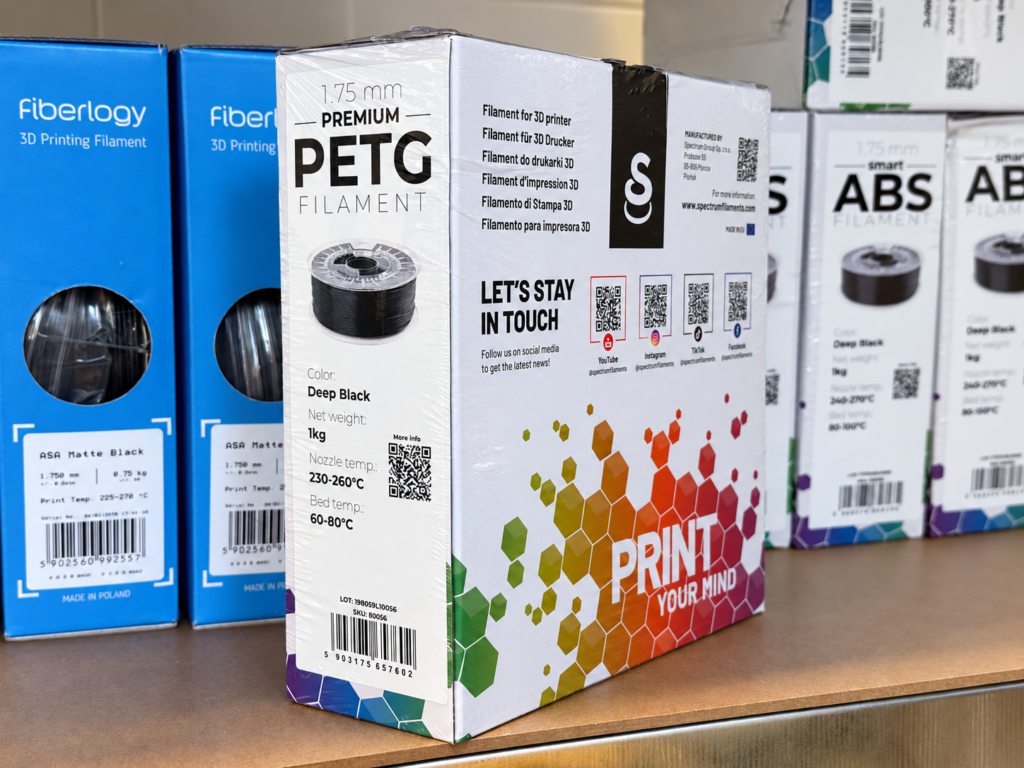
For moderate applications, PETG can provide a good balance between ease of printing, mechanical performance, and cost. For more demanding mechanical, thermal, or dimensional requirements, engineering-grade materials are generally preferred.
At Polyforge AM, PETG in its below specified variants is also available:
- PETG ESD for electrostatic-dissipative apps
- PETG CF reinforced with carbon-fibre
- PETG V0 FR for flame-retardant uses (UL 94)
- PETG GF reinforced with glass-fibre
Engineering and Industrial Materials
Engineering 3D printing materials are designed for functional components that must withstand mechanical loads, elevated temperatures, repeated use, or demanding operating conditions.
These materials are commonly used for industrial prototypes, machine components, production aids, fixtures, housings, brackets, and end-use parts.
ABS
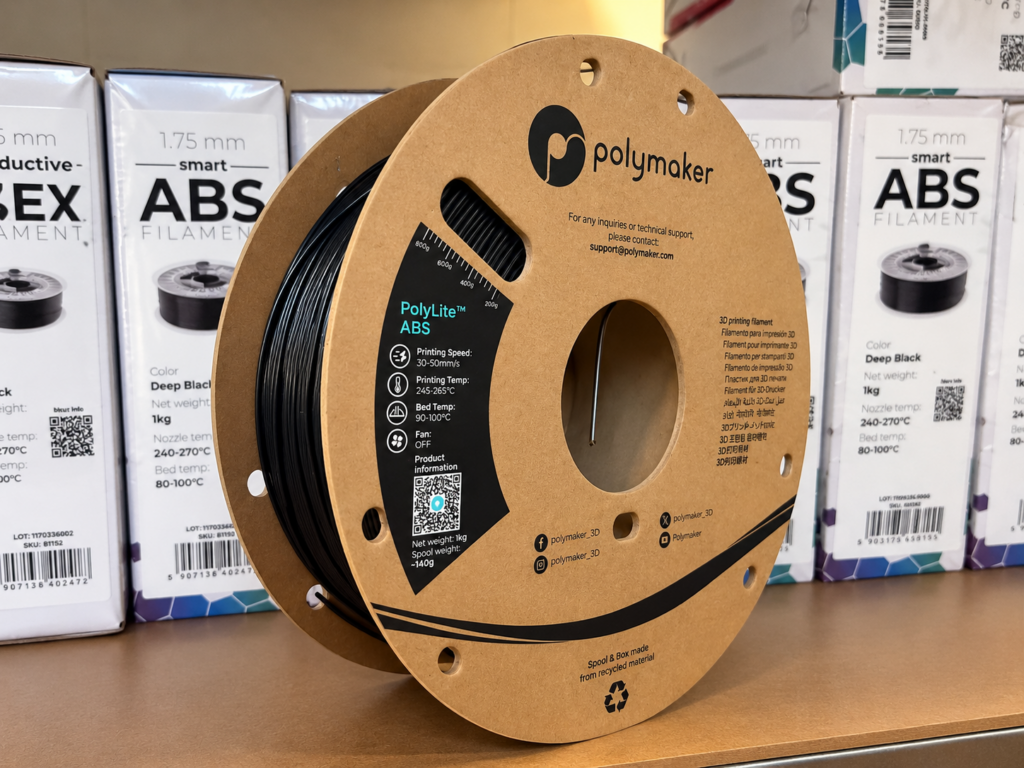
ABS is one of the most established engineering thermoplastics used in industrial manufacturing and maybe the most popular 3D printing material. It combines good impact resistance, toughness, moderate temperature resistance, and good machinability.
Typical applications include:
- machine housings,
- brackets,
- industrial covers,
- production aids,
- automotive components,
- functional prototypes.
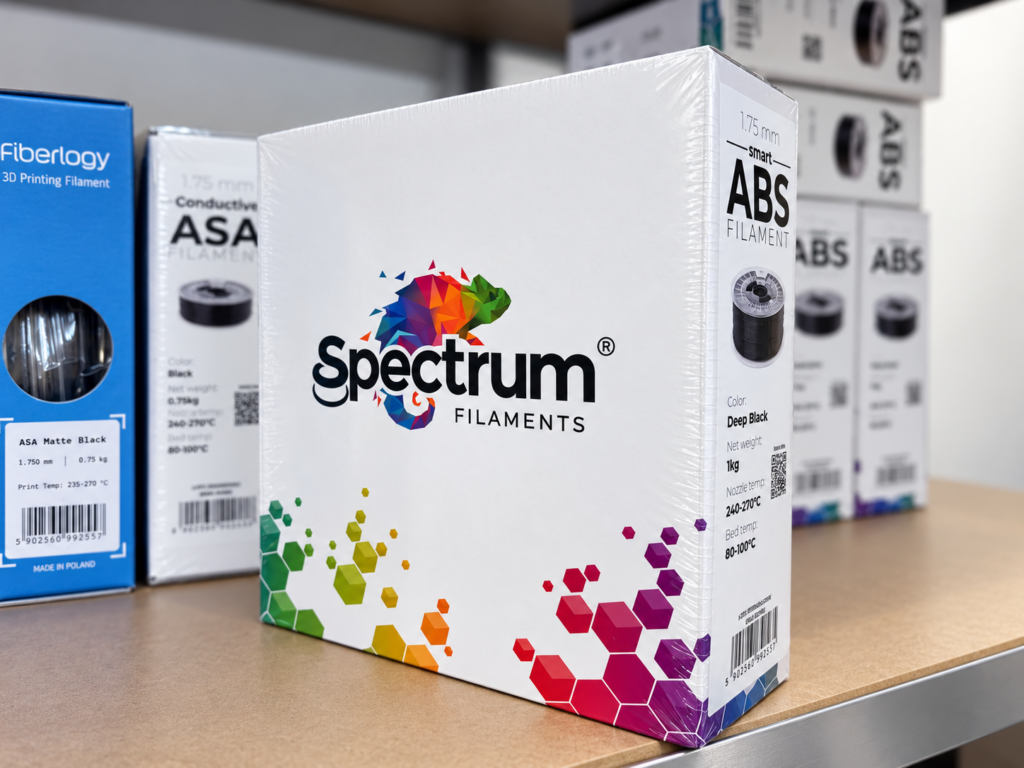
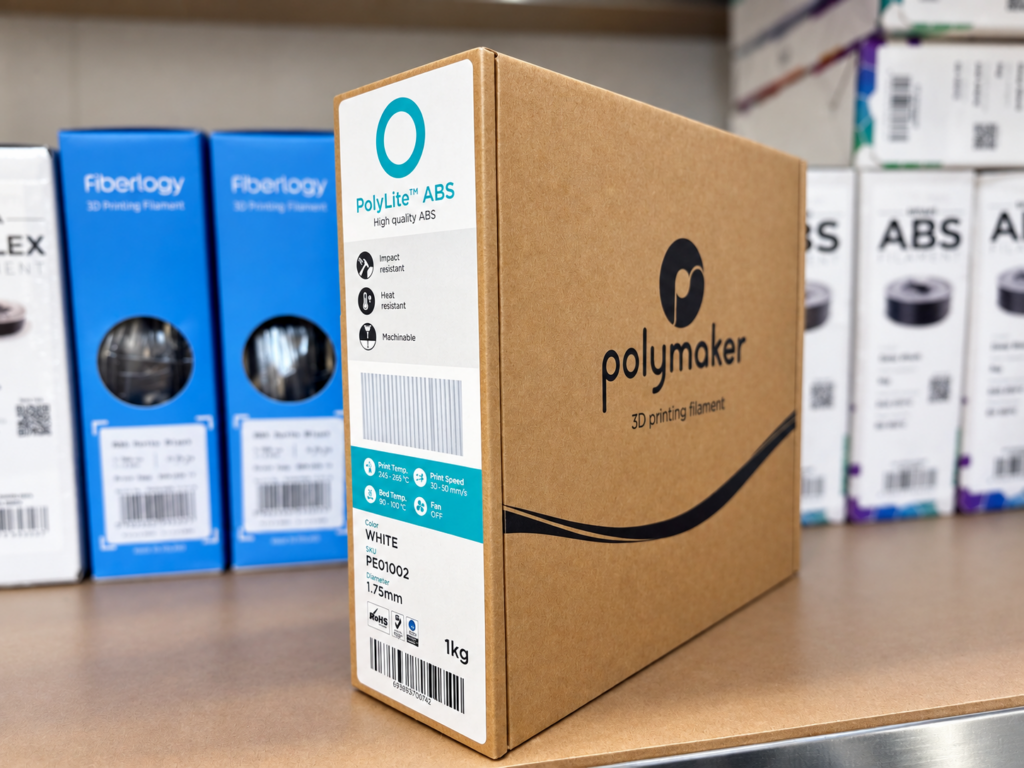
ABS requires a controlled printing environment because it shrinks during cooling. Enclosed and heated build chambers can significantly improve dimensional stability, especially for larger parts.
At Polyforge AM, ABS in its below specified variants is also available:
- ABS ESD for electrostatic-dissipative apps
- ABS Medical for biocompatible requirements
- ABS V0 FR for flame-resistance (UL 94)
- ABS AF for non-conductive properties
- ABS CF reinforced with carbon-fibre
ASA
ASA provides mechanical properties similar to ABS but offers significantly improved UV and weather resistance. This makes it particularly suitable for outdoor and transportation applications.
Typical uses include:
- exterior housings,
- vehicle components,
- outdoor brackets,
- protective covers,
- electrical enclosures,
- industrial outdoor equipment.
ASA is generally preferred 3d printing material over ABS when the component will be exposed to sunlight or outdoor conditions.
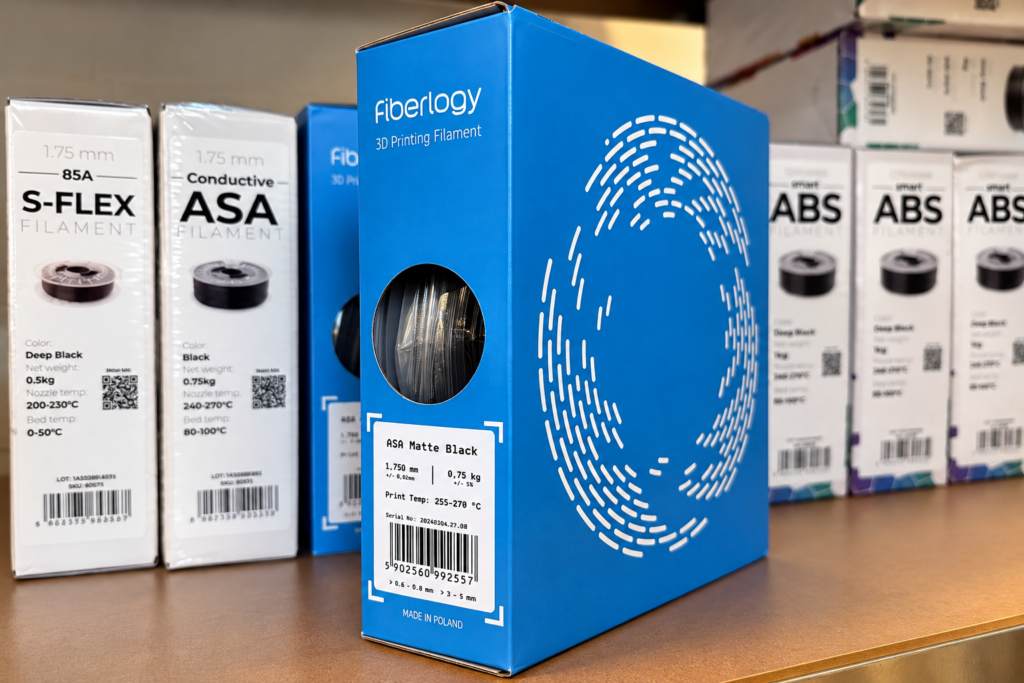
At Polyforge AM, ASA in its below specified variants is also available:
- ASA Kevlar for advanced composition
- ASA CF reinforced with carbon-fibre
- ASA GF reinforced with glass-fibre
PCTG
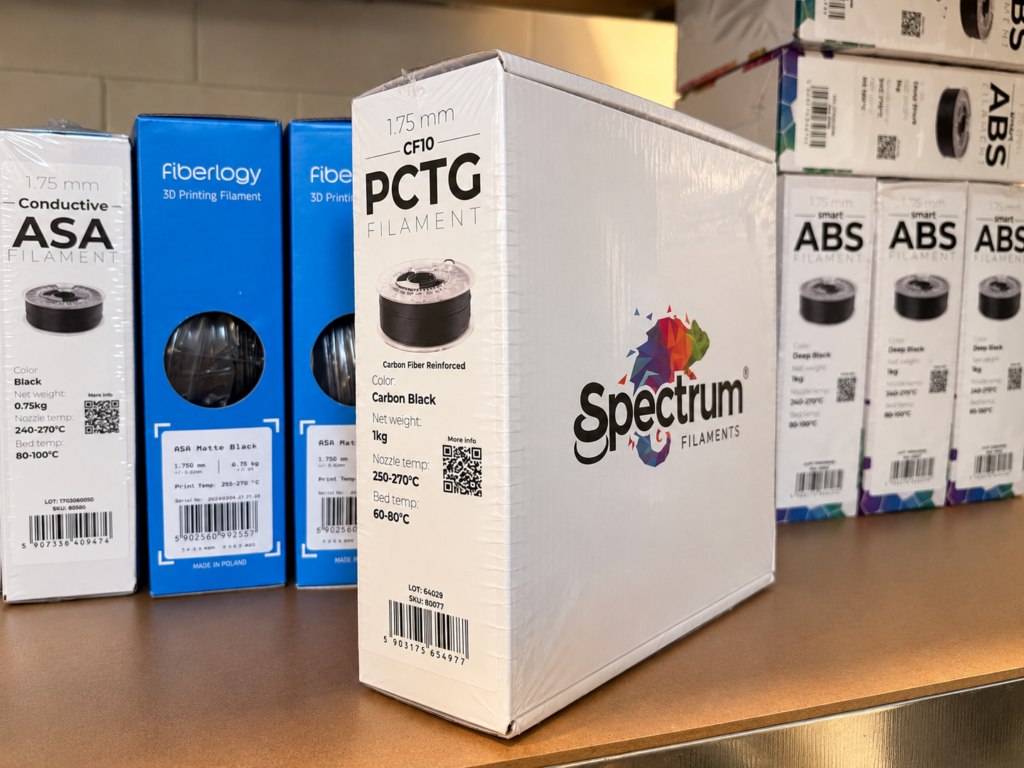
PCTG is a durable engineering copolyester with excellent impact resistance, toughness, and chemical resistance. It offers many of the easy-printing characteristics of PETG while providing improved mechanical performance and better resistance to cracking.
Its low shrinkage and good dimensional stability make it suitable for functional prototypes, housings, brackets, mechanical components, jigs, fixtures, and industrial parts.
Key properties:
- Excellent impact resistance
- High toughness and durability
- Good chemical resistance
- Low shrinkage and good dimensional stability
- Easier to print than many engineering polymers
- Suitable for functional and industrial applications
TPU
TPU is a flexible engineering thermoplastic.
Unlike rigid materials, TPU can deform under load and return to its original shape. Depending on the hardness grade, TPU can range from relatively soft and rubber-like to firm and semi-rigid.
Typical applications include:
- vibration dampers,
- protective parts,
- seals,
- flexible connectors,
- bumpers,
- cable guides,
- impact-resistant components.
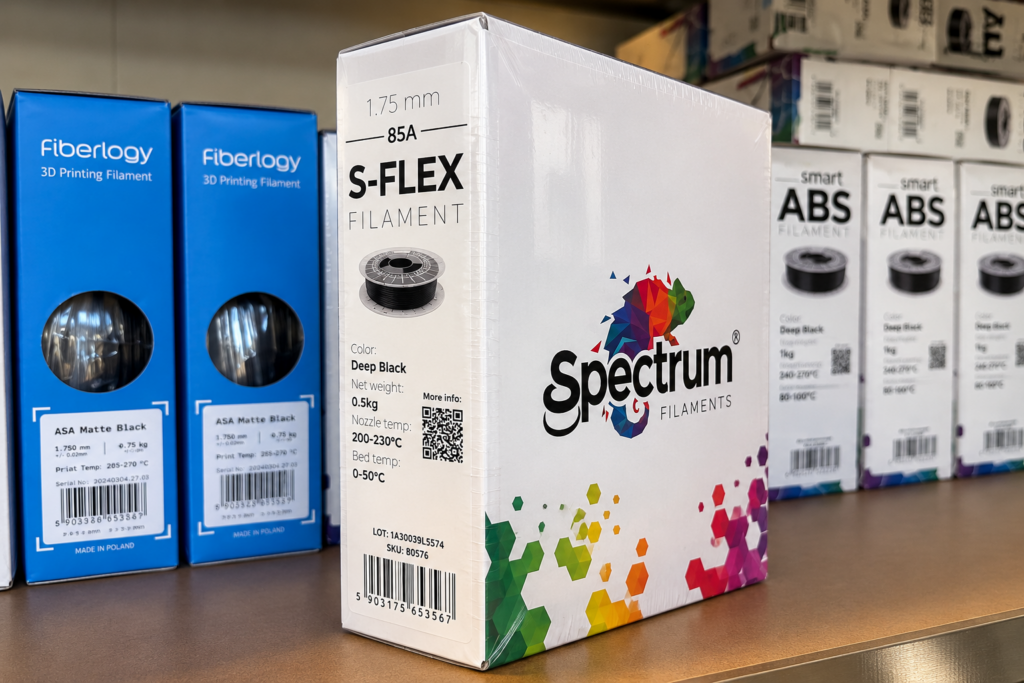
TPU is particularly useful where flexibility, wear resistance, or repeated deformation is required.
At Polyforge AM, TPU in its below specified variants is also available:
- TPU Shore 85A
- TPU Shore 95A
- TPU Shore 98A
- TPU Shore 75D GF reinforced with glass-fibre
PA12
PA12 is an engineering polyamide known for toughness, fatigue resistance, chemical resistance, and good mechanical durability. It’s the engineering grade one among 3d printing materials. Compared with several other polyamides, it absorbs relatively less moisture and provides good dimensional stability.
Typical applications include:
- machine components,
- brackets,
- jigs
- functional housings,
- mechanical parts,
- industrial fixtures.
PA12 is particularly suitable for durable components exposed to repeated mechanical loading.
At Polyforge AM, PA in its below specified variants is also available:
- PA Rail for railway applications (EN 45545-2)
- PA Food for the needs of the agri-food industry
PA6
PA6 provides high mechanical strength, toughness, and wear resistance.
It is widely used in conventional engineering and is also available for industrial FDM manufacturing.
Typical applications include:
- gears,
- mechanical components,
- structural parts,
- machine components,
- industrial tooling.
PA6 generally provides higher strength and temperature resistance than PA12 but absorbs more moisture and therefore requires careful drying and storage.
PC – Polycarbonate
Polycarbonate is a high-performance engineering thermoplastic with excellent impact resistance and good thermal stability.
It is commonly selected when standard polymers do not provide sufficient toughness or temperature resistance.
Typical applications include:
- machine guards,
- structural housings,
- technical enclosures,
- industrial components,
- functional prototypes,
- tooling.
PC requires higher printing temperatures and benefits strongly from a controlled heated build chamber.
At Polyforge AM, PC-ABS in its below specified variants is also available:
- PC CF reinforced with carbon-fibre
- PC V0 for flame-retardant properties (UL 94)
PC-ABS
PC-ABS combines the toughness and temperature resistance of polycarbonate with the processing advantages of ABS.
It is widely used in automotive, electronics, and industrial applications.
Typical uses include:
- technical housings,
- automotive interior components,
- machine covers,
- functional prototypes,
- mechanically loaded parts.
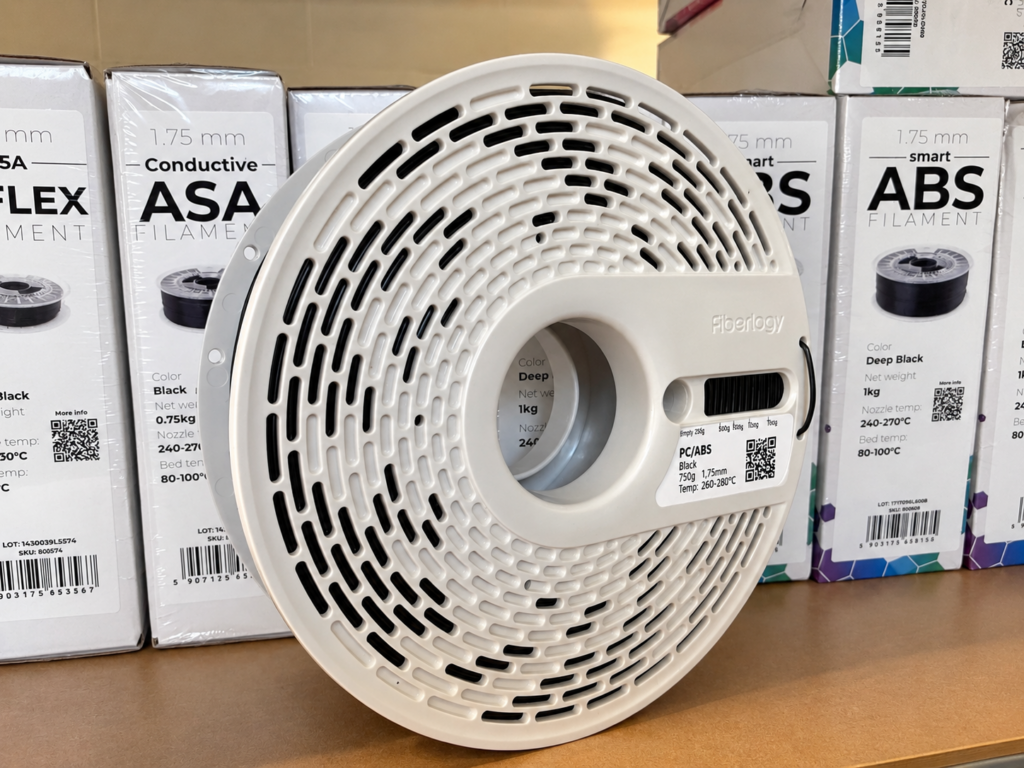
PC-ABS is often a good intermediate solution between standard ABS and pure polycarbonate.
At Polyforge AM, PC-ABS in its below specified variants is also available:
- PC-ABS Rail for railway uses (NF EN 45545-2)
- PC-ABS V0 for flame-resistance (UL 94)
Carbon and Glass-Fibre Composites
Fibre-reinforced polymers are among the most important industrial 3D printing materials for mechanically demanding applications.
Short carbon or glass fibres are added to the base polymer to increase stiffness, improve dimensional stability, and reduce deformation.
These materials are particularly valuable for lightweight structural components, tooling, fixtures, and industrial machine parts.
PETG-CF
PETG-CF combines the easy processing characteristics of PETG with carbon-fibre reinforcement. The fibres increase stiffness and dimensional stability compared with standard PETG.
Typical applications include:
- machine brackets,
- fixtures,
- rigid housings,
- lightweight components,
- production aids.
PETG-CF is useful when conventional PETG is too flexible but higher-performance polyamides are not required.
PETG-GF
PETG-GF uses glass-fibre reinforcement instead of carbon fibre. It provides improved stiffness and mechanical stability while maintaining good general durability.
Typical applications include:
- industrial brackets,
- machine components,
- housings,
- production tools,
- structural parts.
ABS-CF
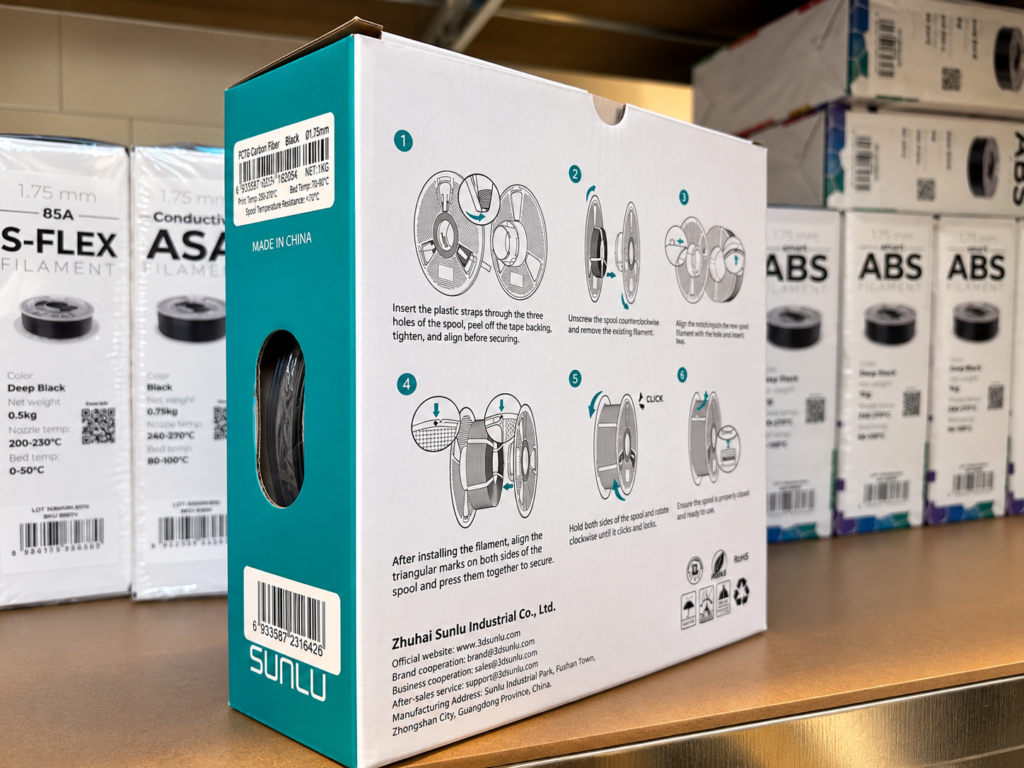
ABS-CF is a carbon-fibre reinforced ABS material. Carbon reinforcement increases rigidity and dimensional stability while reducing deformation during printing.
It can be suitable for:
- structural brackets,
- rigid housings,
- fixtures,
- machine components,
- lightweight industrial parts.
ABS-GF
ABS-GF contains glass-fibre reinforcement. The glass fibres increase stiffness and mechanical stability while maintaining many of the useful characteristics of ABS.
Typical applications include:
- industrial housings,
- machine brackets,
- tooling,
- production fixtures,
- mechanically loaded components.
PA12-CF
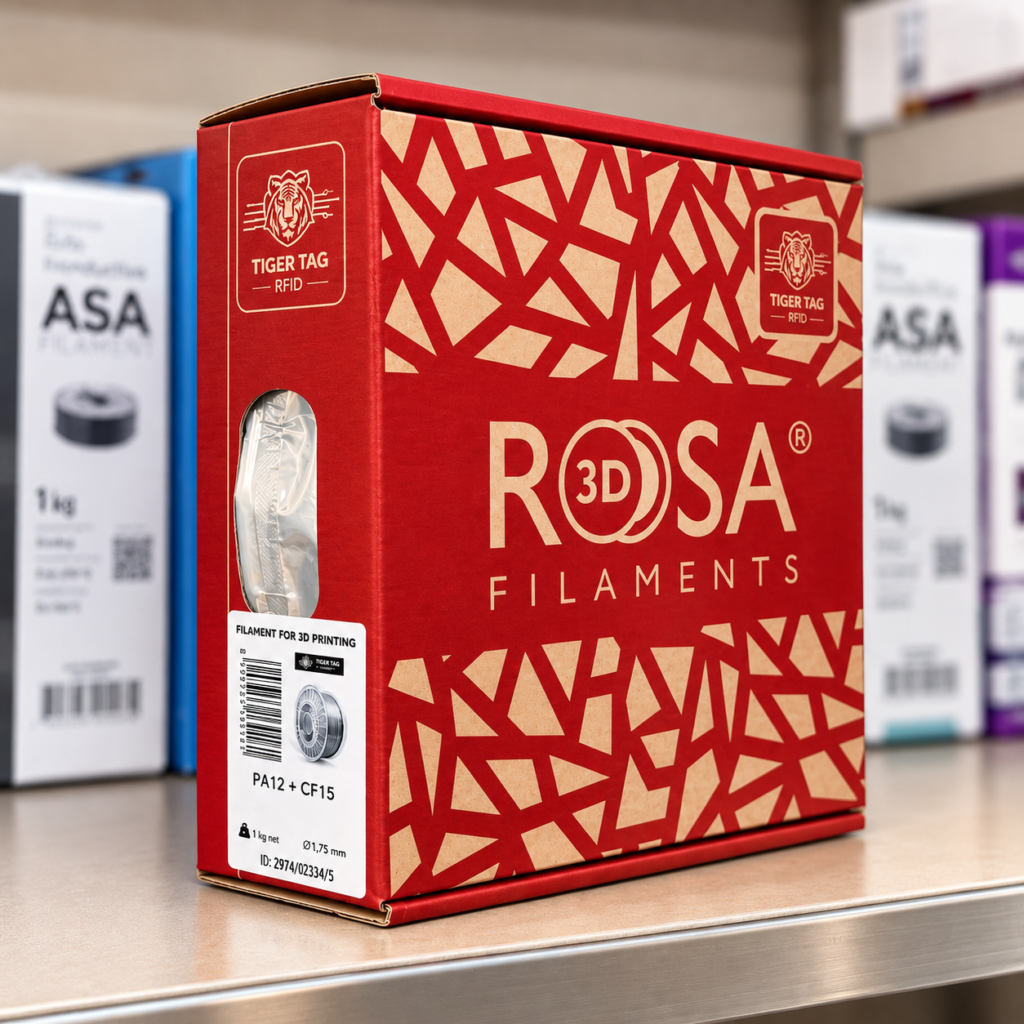
PA12-CF is one of the most important engineering composite materials used in professional FDM manufacturing. It’s a lightweight engineering material with high stiffness, durability and dimensional stability. It combines PA12 with short carbon fibres.
The reinforcement provides:
- high stiffness,
- excellent dimensional stability,
- low weight,
- reduced deformation,
- good mechanical performance.
Typical applications include:
- machine components,
- jigs and fixtures,
- robotic parts,
- motorsport components,
- lightweight brackets,
- structural parts,
- functional end-use components.
PA12-CF provides an excellent strength-to-weight ratio and is particularly suitable for demanding industrial applications.
PA12-GF
PA12-GF combines PA12 with glass-fibre reinforcement. Its a lightweight engineering material with high stiffness, durability and dimensional stability.
Typical applications include:
- industrial housings,
- machine components,
- tooling,
- brackets,
- structural parts.
PA6-CF
PA6-CF is a high-performance carbon-fibre reinforced polyamide.
It provides very high stiffness, good heat resistance, and strong mechanical performance.
Typical applications include:
- structural machine parts,
- robotic components,
- motorsport parts,
- tooling,
- fixtures,
- lightweight engineering structures.
PA6-GF
PA6-GF uses glass fibres to significantly increase stiffness and mechanical strength. It is suitable for heavily loaded engineering parts.
Typical applications include:
- machine brackets,
- industrial tooling,
- structural parts,
- automotive components,
- heavy-duty fixtures.
PC-CF
PC-CF combines the toughness and heat resistance of polycarbonate with carbon-fibre reinforcement. The result is a highly rigid engineering 3d printing material, suitable for demanding applications.
Typical applications include:
- structural machine parts,
- high-stiffness brackets,
- production tools,
- robotics,
- high-temperature engineering components.
Medical 3D Printing Materials
Medical-grade 3D printing materials are specially produced for applications where controlled material composition, traceability, and documented biological compatibility may be required.
The exact suitability of any medical filament depends on the specific manufacturer, certification, intended contact type, and regulatory requirements of the final application.
A material described as medical-grade should therefore always be evaluated according to its supplier documentation and intended use.
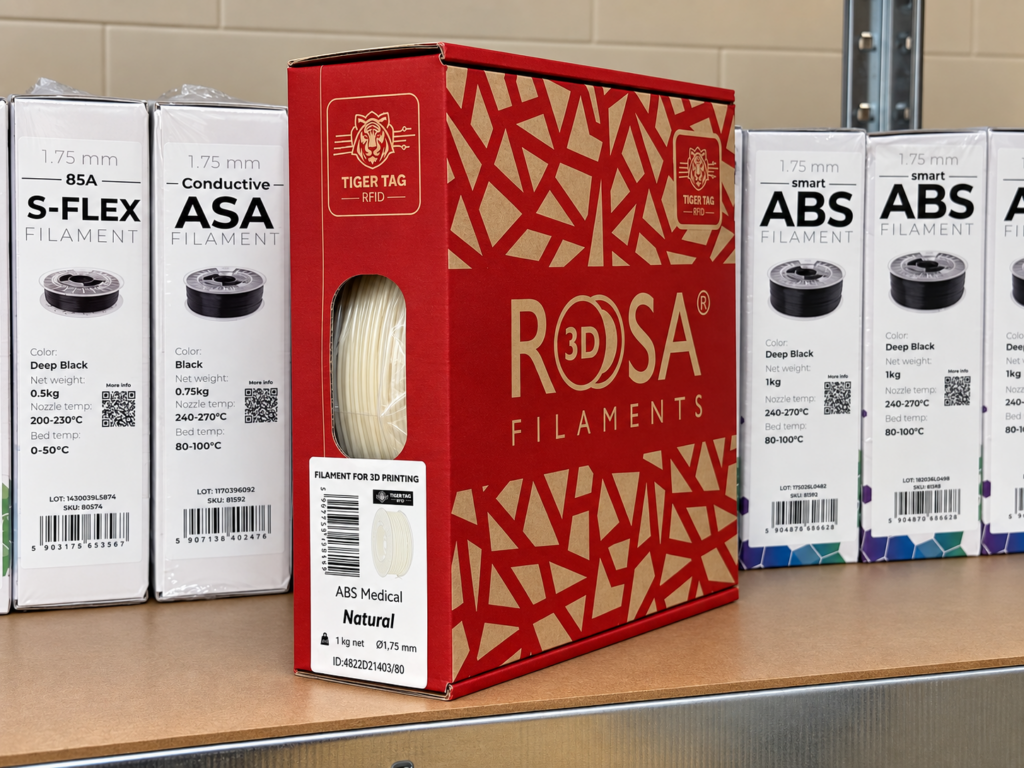
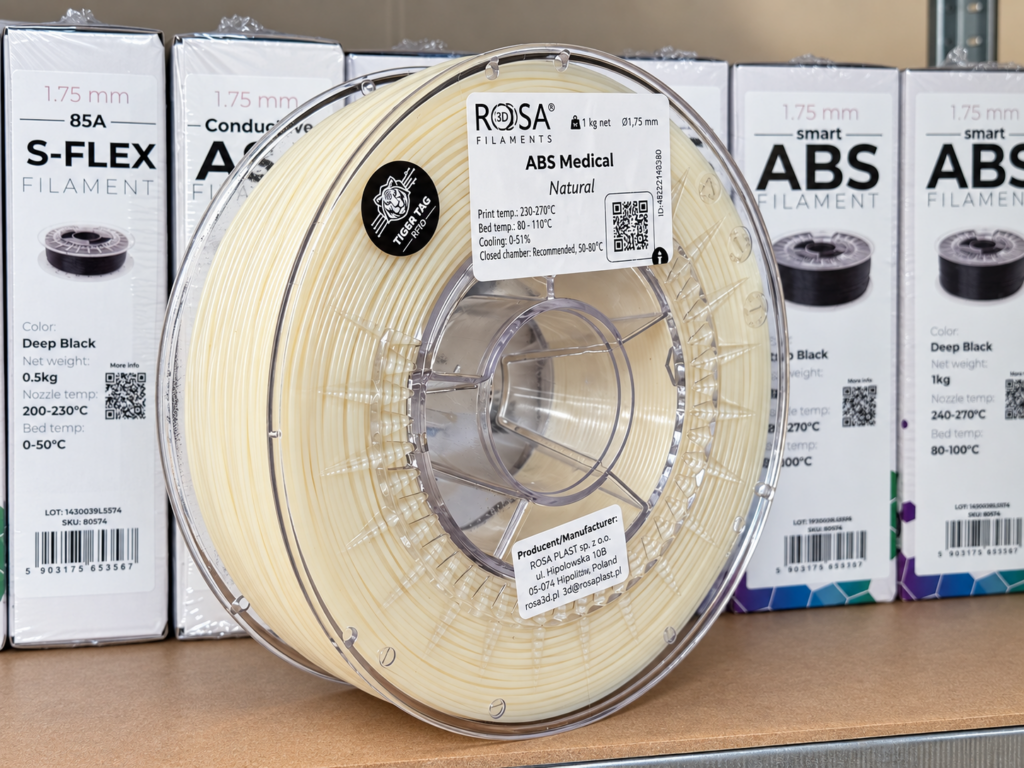
Medical ABS
Medical ABS combines the processing and mechanical characteristics of ABS with material documentation intended for selected medical or laboratory applications.
Possible uses may include:
- medical device housings,
- laboratory fixtures,
- anatomical equipment,
- non-implantable technical components,
- medical prototypes.
The permitted application depends on the specific material grade and certification.
Medical PETG
Medical PETG can provide good toughness, transparency options, chemical resistance, and ease of processing.
It may be suitable for selected medical devices, laboratory components, prototypes, and technical accessories.
Typical applications may include:
- laboratory fixtures,
- medical housings,
- non-implantable components,
- technical prototypes,
- disposable or limited-use components.
The exact scope depends on supplier documentation.
Medical PC
Medical-grade polycarbonate is particularly interesting for applications requiring higher mechanical strength, impact resistance, or thermal performance.
Depending on the specific certified grade, it can be used for selected medical devices and technical components.
Potential applications include:
- surgical guides,
- medical housings,
- technical medical parts,
- laboratory components,
- mechanically demanding medical devices.
Biocompatibility, sterilization compatibility, and permitted contact duration must always be confirmed for the exact material grade used.
Special and Functional Materials
Some FDM applications require properties beyond conventional mechanical strength.
Specialized materials are available for electrostatic protection, fire performance, conductivity, chemical resistance, and other functional requirements.
ESD-Safe Materials
ESD-safe 3D printing materials are designed to dissipate electrostatic charge in a controlled manner.
They are particularly important in electronics manufacturing, PCB handling, assembly, and sensitive production environments.
ABS-ESD
ABS-ESD combines the mechanical characteristics of ABS with electrostatic dissipative properties. Its a very special and useful 3D printing material.
Typical applications include:
- PCB transport boxes,
- electronics trays,
- component holders,
- production fixtures,
- electronics housings,
- ESD-safe manufacturing tools.
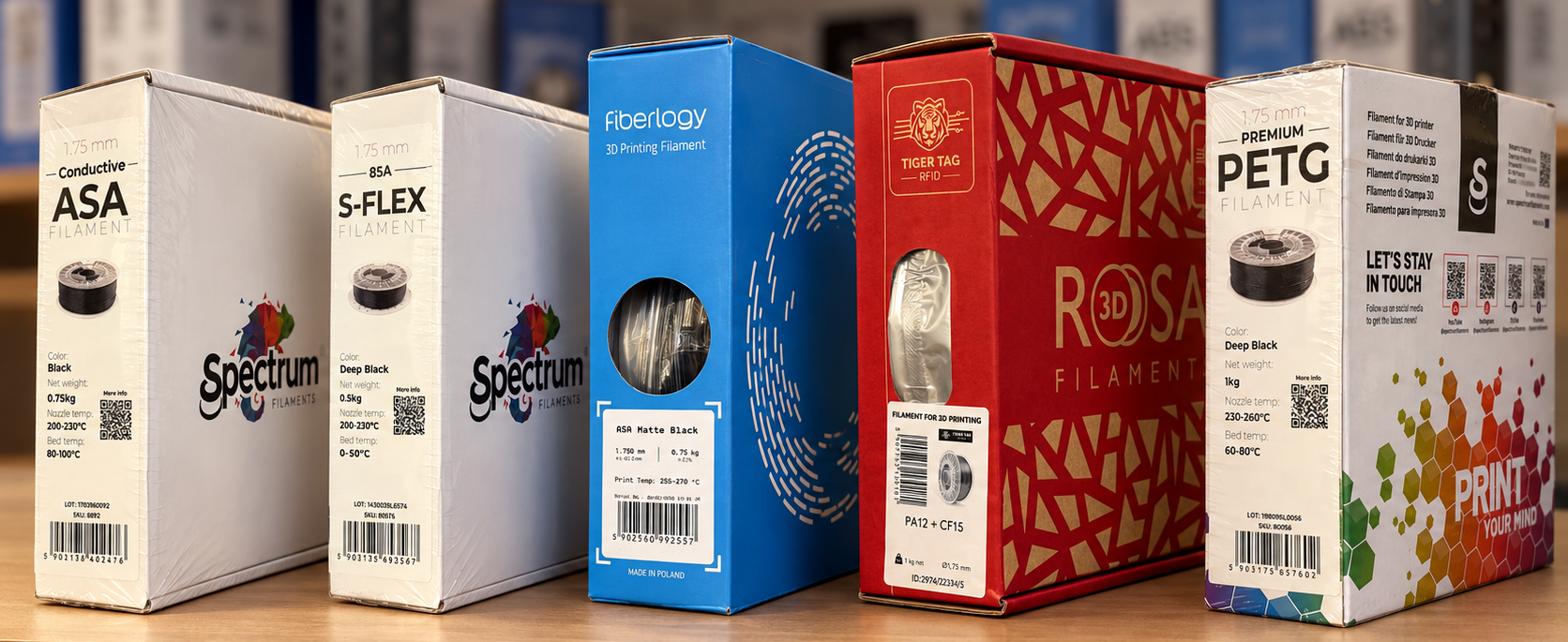
ASA Conductive
Conductive ASA is an advanced engineering filament combining the weather resistance and dimensional stability of ASA with electrically conductive properties. It is suitable for functional parts that require improved electrostatic dissipation, outdoor durability, and good mechanical performance.
Typical applications include ESD-sensitive components, electronic housings, fixtures, technical enclosures, industrial parts, and outdoor applications. Compared with standard ASA, the conductive formulation helps reduce static charge accumulation while maintaining good temperature resistance and UV stability.
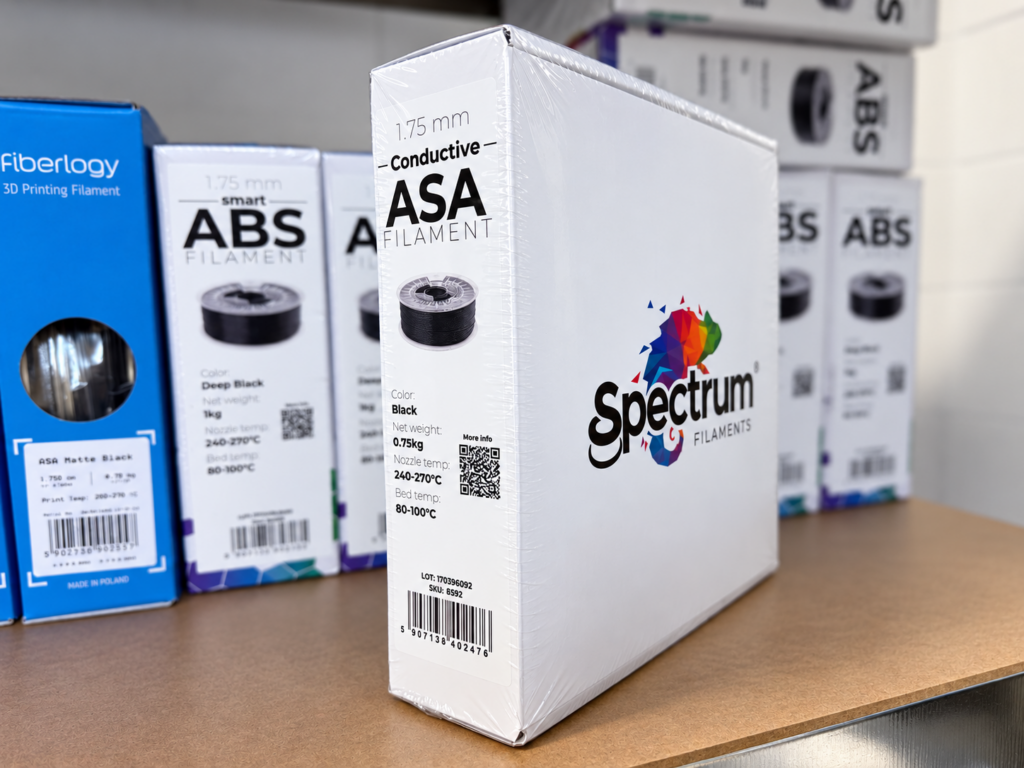
For reliable printing, Conductive ASA requires a heated bed, enclosed build chamber, controlled cooling, and proper filament drying. A hardened nozzle is recommended for long-term production use.
Key properties:
- Electrically conductive / static-dissipative behaviour
- Good UV and weather resistance
- High dimensional stability
- Good mechanical strength
- Suitable for technical and industrial applications
- Better outdoor durability than ABS
PLA ESD
PLA ESD is a static-dissipative thermoplastic designed for applications where controlled electrostatic discharge is important. It combines the easy printability and dimensional stability of PLA with ESD-safe properties, making it suitable for electronics handling, storage solutions, trays, fixtures and protective components.
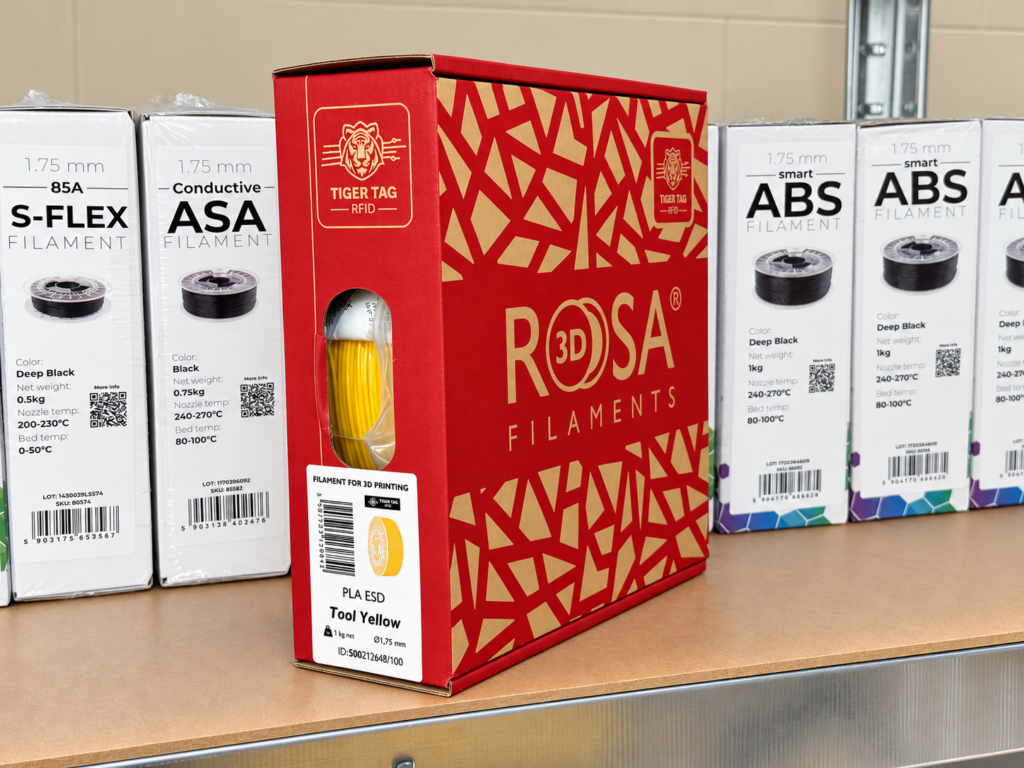
The material is particularly useful for low-load technical parts used around sensitive electronic components, PCBs and assembly environments. Compared with standard PLA, PLA ESD helps reduce the risk of electrostatic charge accumulation while remaining relatively easy to process on FDM systems.
Typical applications include ESD-safe trays, holders, electronic housings, assembly aids, storage components and workshop fixtures.
PETG-ESD
PETG-ESD provides ESD properties with the relatively easy processing characteristics of PETG.
Typical applications include:
- PCB storage systems,
- electronics fixtures,
- component trays,
- assembly tools,
- technical housings.
Flame-Retardant Materials
Flame-retardant FDM 3D printing materials are developed for applications where reduced flammability or compliance with specific fire-performance standards is required.
The actual rating depends on the exact material and certification.
ABS-FR
ABS-FR combines the engineering characteristics of ABS with a flame-retardant formulation.
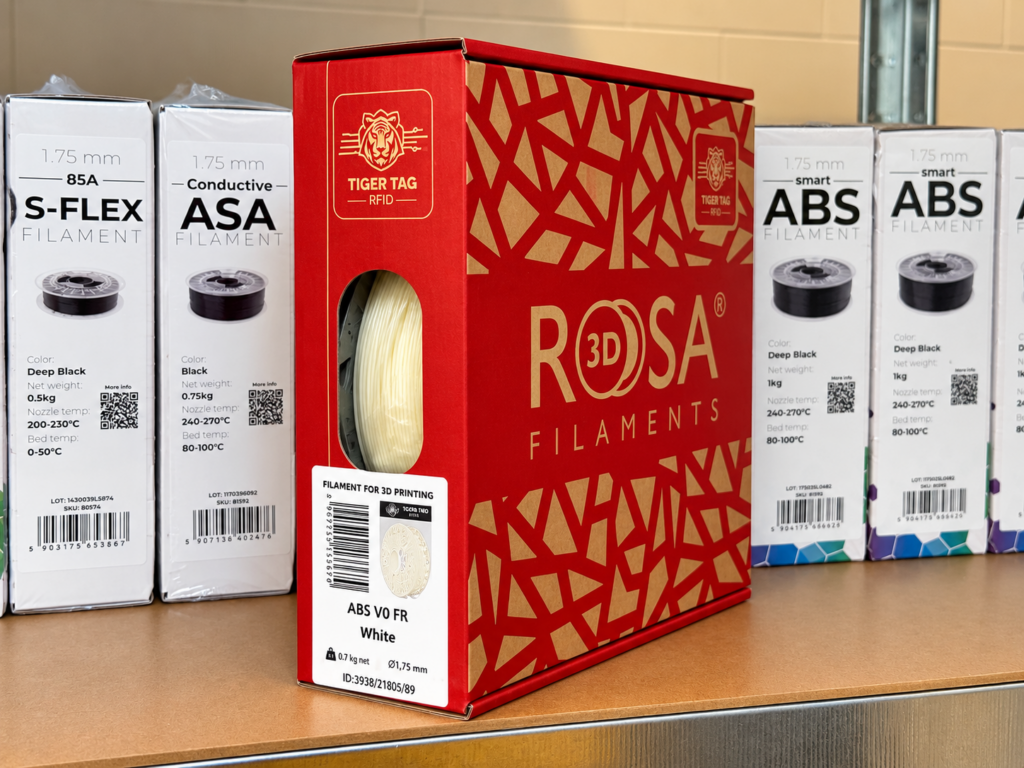
Typical applications include:
- electrical housings,
- transportation components,
- machinery,
- technical enclosures,
- electronics.
PC-FR
Flame-retardant polycarbonate provides higher thermal and mechanical performance than many standard FR polymers.
Typical applications include:
- electrical equipment,
- industrial housings,
- transportation,
- technical enclosures,
- high-temperature components.
PC-ABS FR
PC-ABS flame-retardant materials combine good impact resistance, thermal performance, and fire behaviour.
They are commonly used in electrical and transportation applications.
PA-FR
Flame-retardant polyamides can provide good mechanical strength combined with improved fire performance.
Applications can include:
- electrical systems,
- industrial machinery,
- transportation,
- technical housings.
For regulated industries, the exact standard—such as UL 94 or sector-specific railway, aviation, or automotive requirements—must be verified for the selected material.
How to Select the Right Material
The most advanced material is not necessarily the best material for every component.
Correct material selection should be based on the real operating conditions of the part.
Important factors include:
- mechanical loading,
- impact resistance,
- stiffness,
- flexibility,
- operating temperature,
- UV exposure,
- chemical environment,
- moisture,
- dimensional stability,
- ESD requirements,
- fire-performance requirements,
- regulatory requirements,
- component weight,
- and production cost.
For a simple visual prototype, a PLA 3D printing filament may be completely sufficient.
For a general functional component, PETG may provide the required performance.
Industrial machine parts may require ABS, ASA, PA12, PA6, or PC.
Lightweight structural components may benefit from PA12-CF or PA6-CF.
Electronics manufacturing may require ESD-safe materials.
Regulated medical applications may require documented medical-grade polymers.
High-temperature applications may require PPS, PEI, PEEK, or PEKK.
Material Drying and Storage
Correct material preparation is essential for professional FDM manufacturing.
Many engineering polymers absorb moisture from the surrounding air.
This is particularly important for:
- PA6,
- PA12,
- TPU,
- PC,
- PPS,
- PEI,
- PEEK,
- and fibre-reinforced engineering materials.
Moisture can negatively affect extrusion quality and final mechanical performance.
Possible problems include:
- bubbles,
- inconsistent extrusion,
- rough surfaces,
- poor layer adhesion,
- dimensional instability,
- reduced mechanical strength.
Professional material handling therefore includes controlled storage and appropriate drying before printing.
Materials at POLYFORGE-AM
POLYFORGE-AM uses a broad range of FDM 3D printing materials for prototyping, industrial components, engineering applications, and low-volume manufacturing.
Our material portfolio can be divided into several performance categories:
Basic materials for prototypes and simple applications.
Engineering and industrial materials for functional components.
Carbon and glass-fibre composites as lightweight engineering materials for high stiffness and dimensional stability.
Medical materials for selected documented medical applications.
Special materials for ESD, flame-retardant, or other functional requirements.
High-performance materials for elevated temperature and demanding industrial environments.
Material selection is always based on the actual function of the component rather than simply choosing the strongest available polymer.
Need Help Choosing a Material?
Send us your 3D model, technical drawing, or project requirements.
Information about operating temperature, mechanical load, environment, required quantity, and critical dimensions helps us determine the most suitable material category for your project.
POLYFORGE-AM – industrial FDM manufacturing with materials selected for the application.